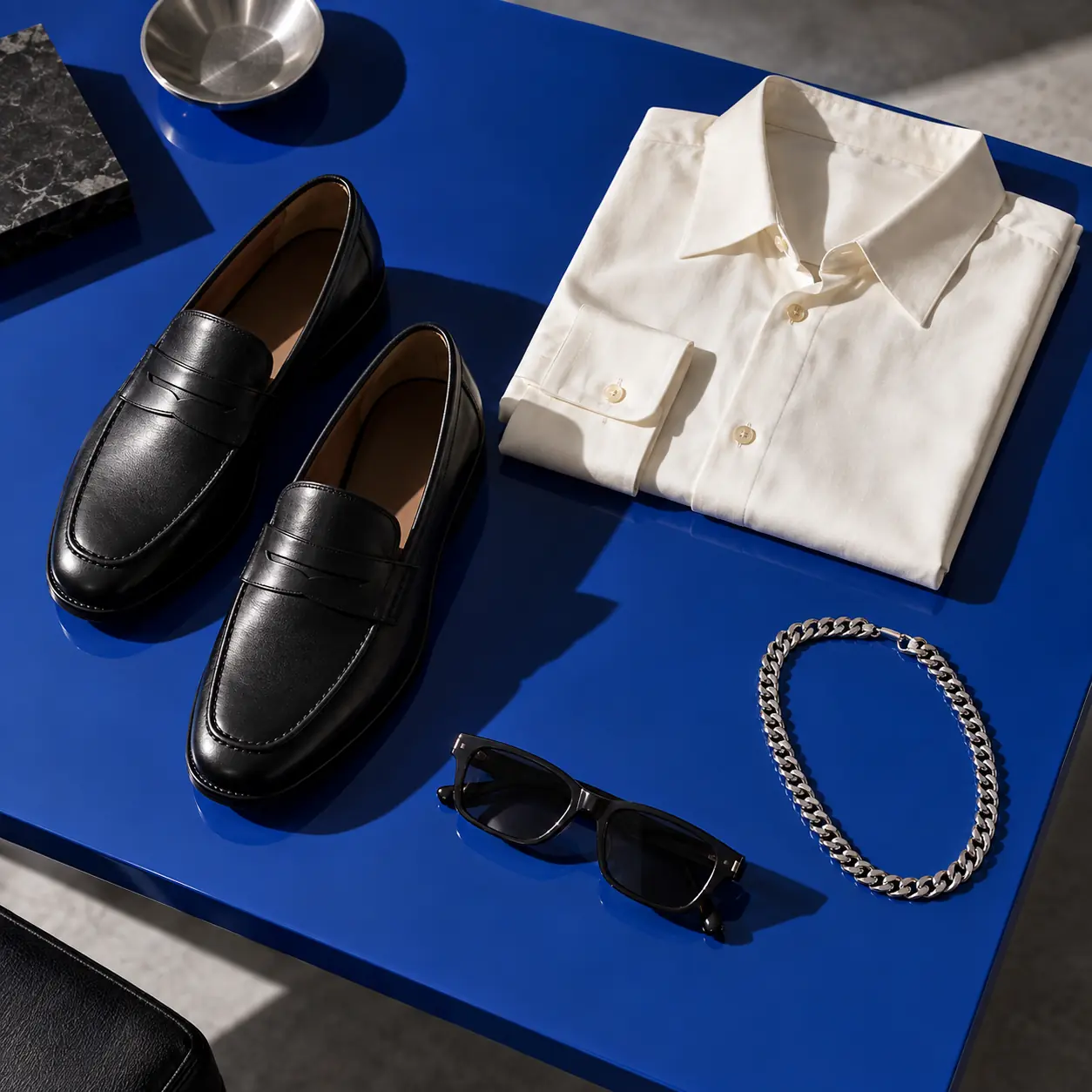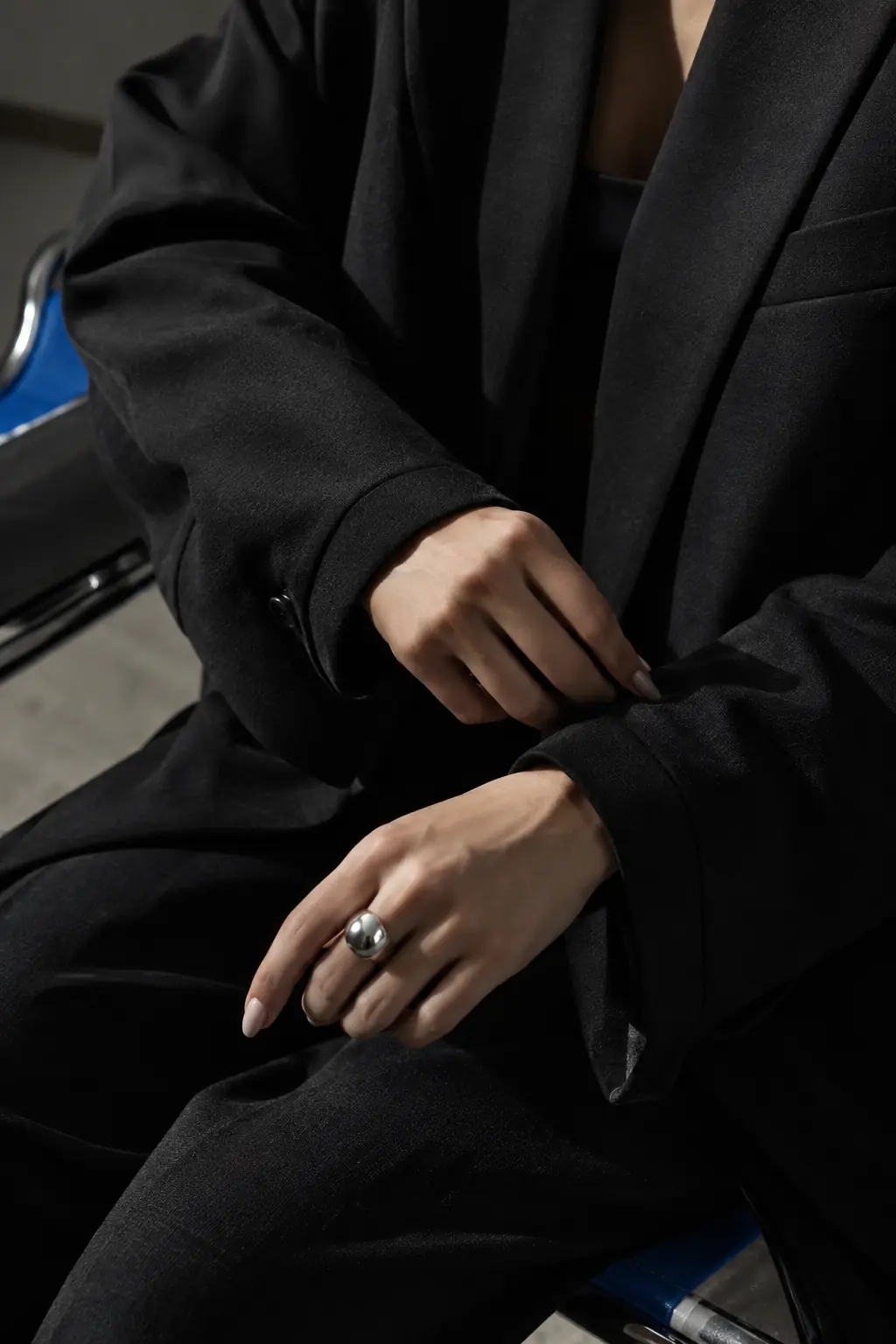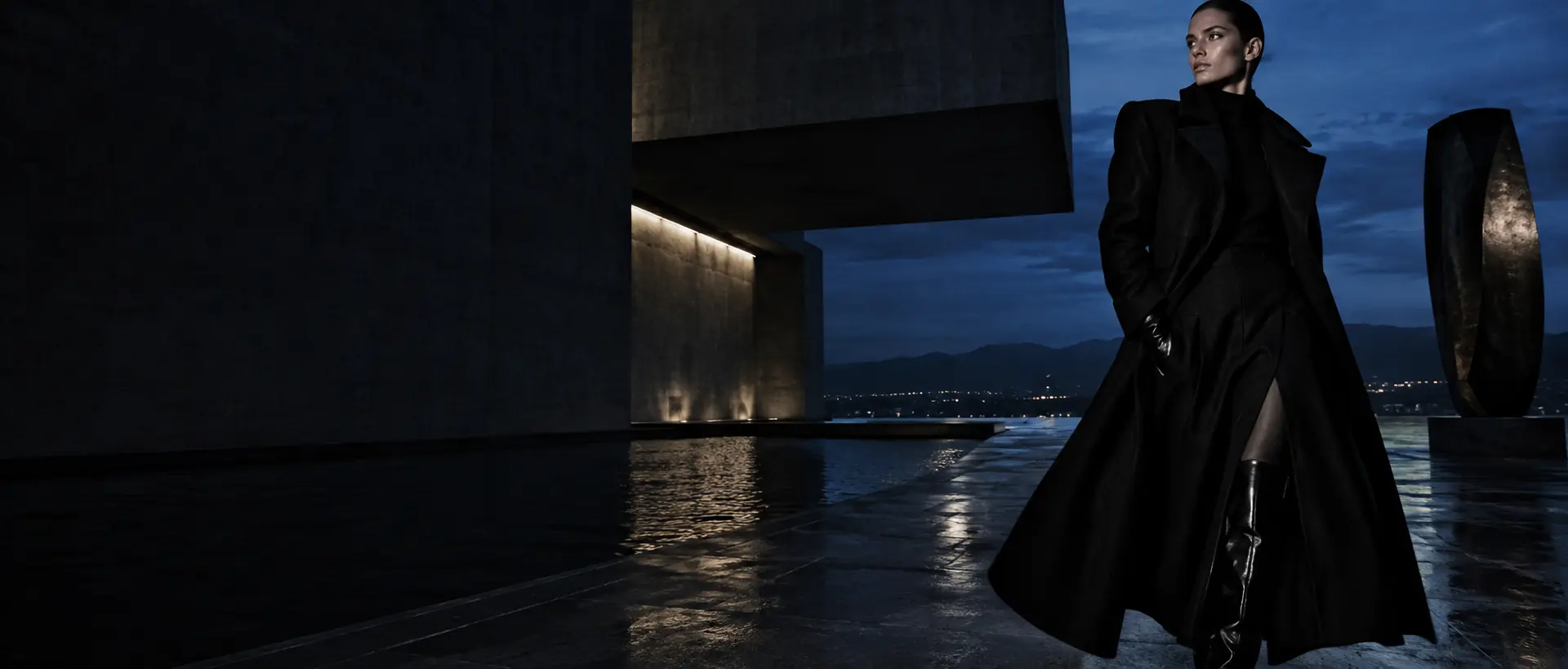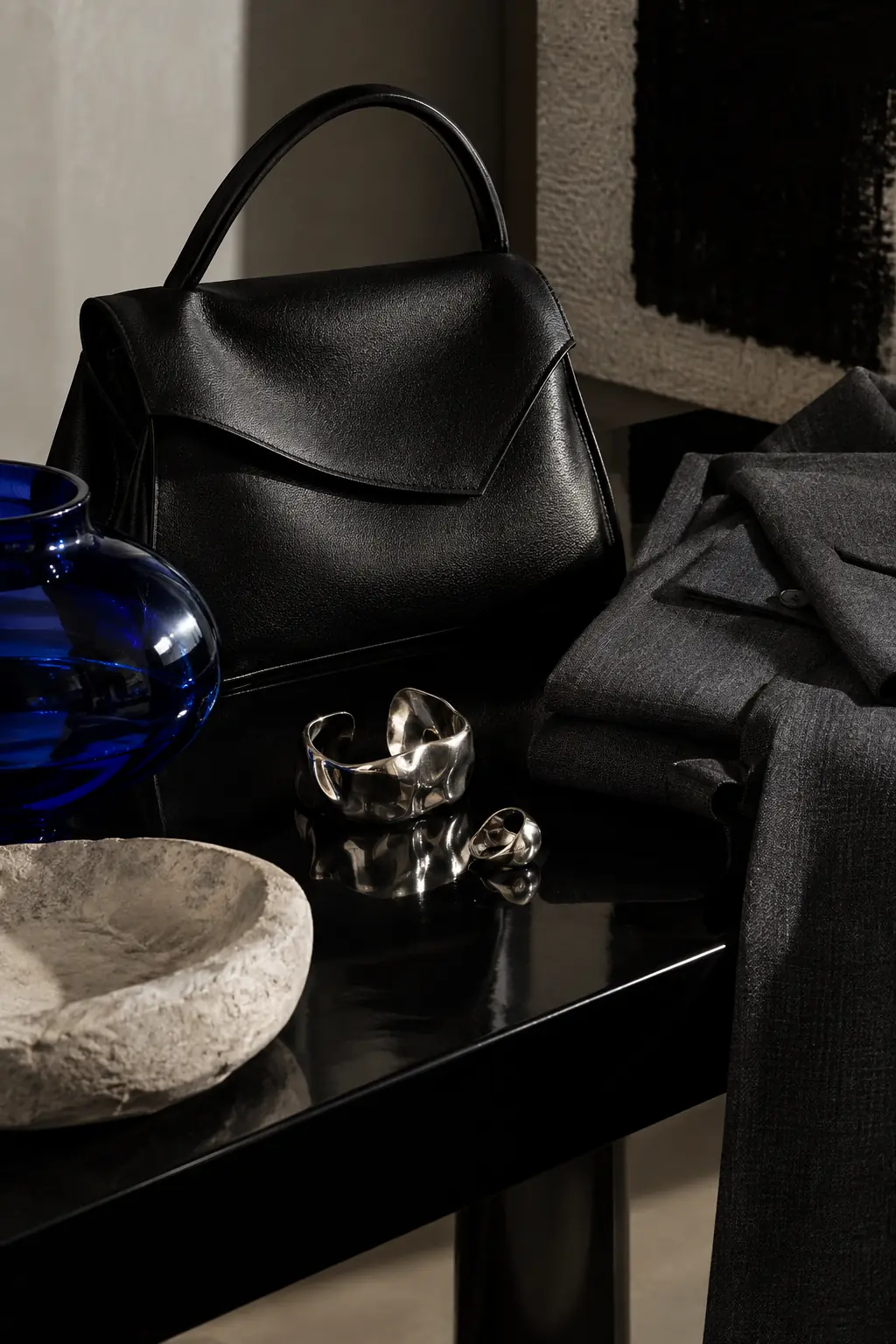
A silver chain. A smoked frame. A bag in a color that refuses to be called neutral. You only need one.
Choose the piece that makes the rest of your closet look more deliberate. That is the whole trick.
Pick by where people look
Accessories work by pulling the eye. Decide where you want it. A chain or a frame brings attention to the face, which is useful when the clothes are simple. A bag or a shoe pulls it lower and lets the outfit do more of the talking.
If most of what you own is plain, go near the face. If your clothes already have shape and detail, put the weight lower so the two do not compete.
Pick by how often you will wear it
The point of one accessory is repetition. Wear it until people think of it as yours. That rules out anything you have to plan an outfit around. Hold it up against the three things you wear most. If it works with all three, it is a candidate. If it works with one, it is a costume piece.
Metal is the easiest place to start because it ignores color. Silver sits with black, bone, navy and denim alike. A colored leather is harder but louder: oxblood, cobalt or a deep green turns a neutral wardrobe into a point of view.
Mistakes worth avoiding
Buying for an occasion instead of for the week. A piece bought for one wedding sits in a drawer. Buy the thing you would wear on a Tuesday.
Matching too hard. An accessory that repeats the exact color of the outfit disappears into it. It should relate to the clothes, not copy them.
Going too small to be noticed. A delicate chain on a heavy coat reads as an afterthought. If the accessory is supposed to carry the look, give it enough scale to be seen across a room. Then wear it with confidence and stop adjusting it.
Then stop
The risk with a good accessory is the second one. Let the first piece carry the outfit for a season before adding anything. Restraint is what makes it read as a signature instead of a collection.