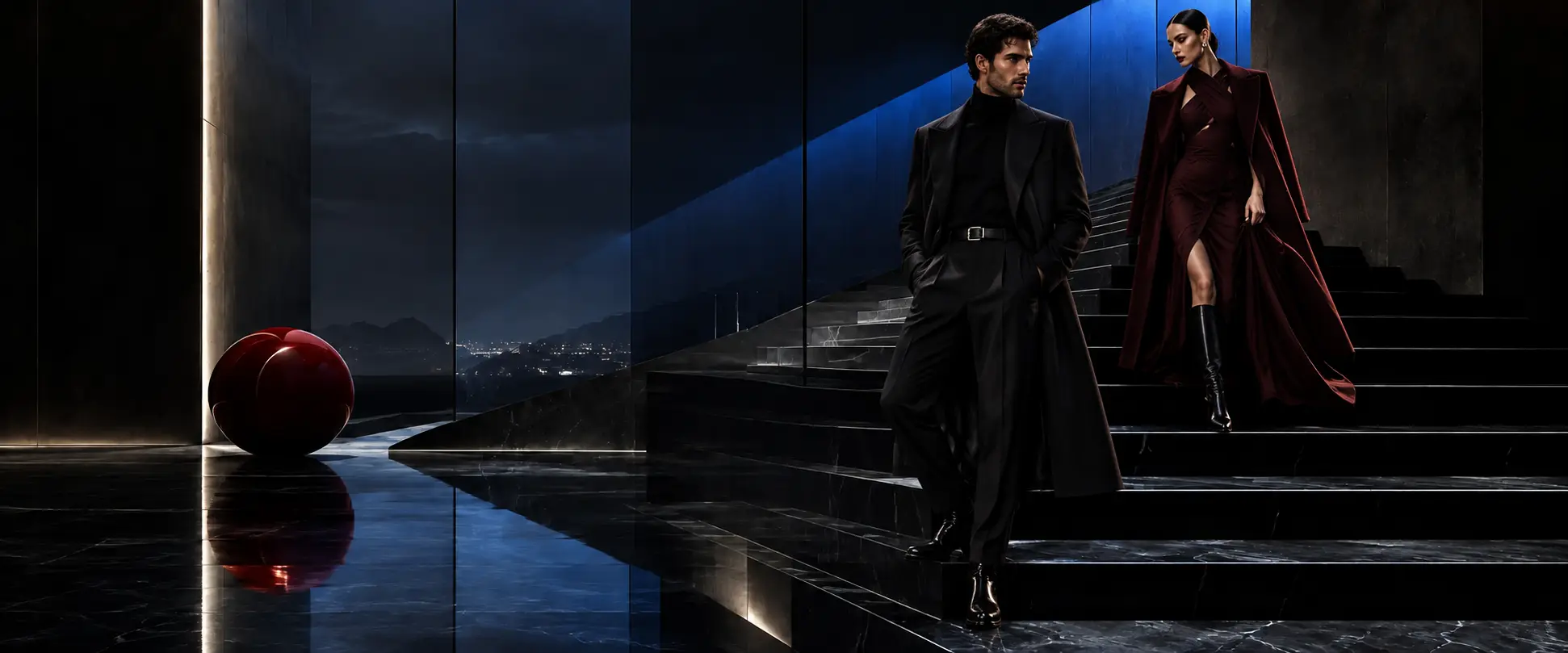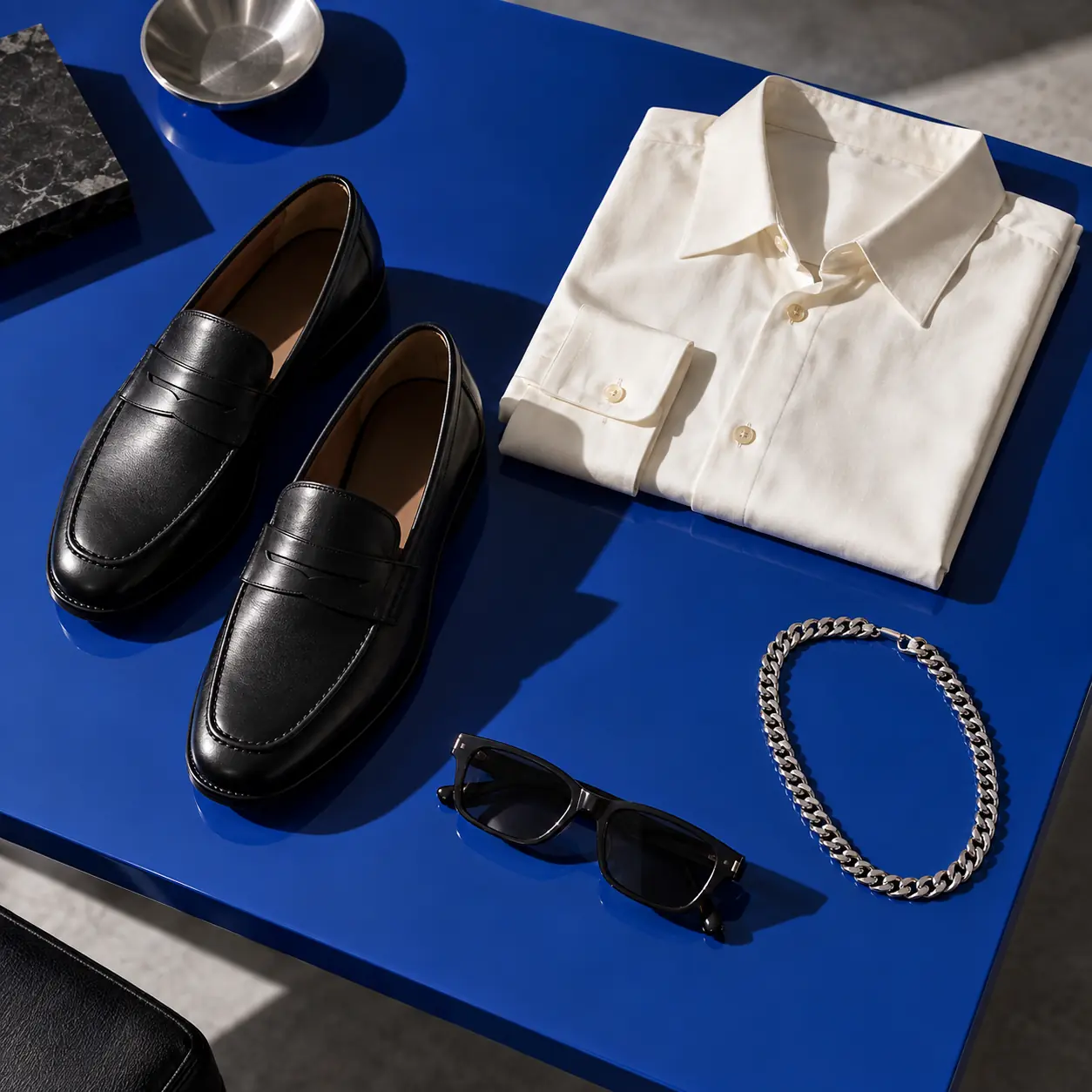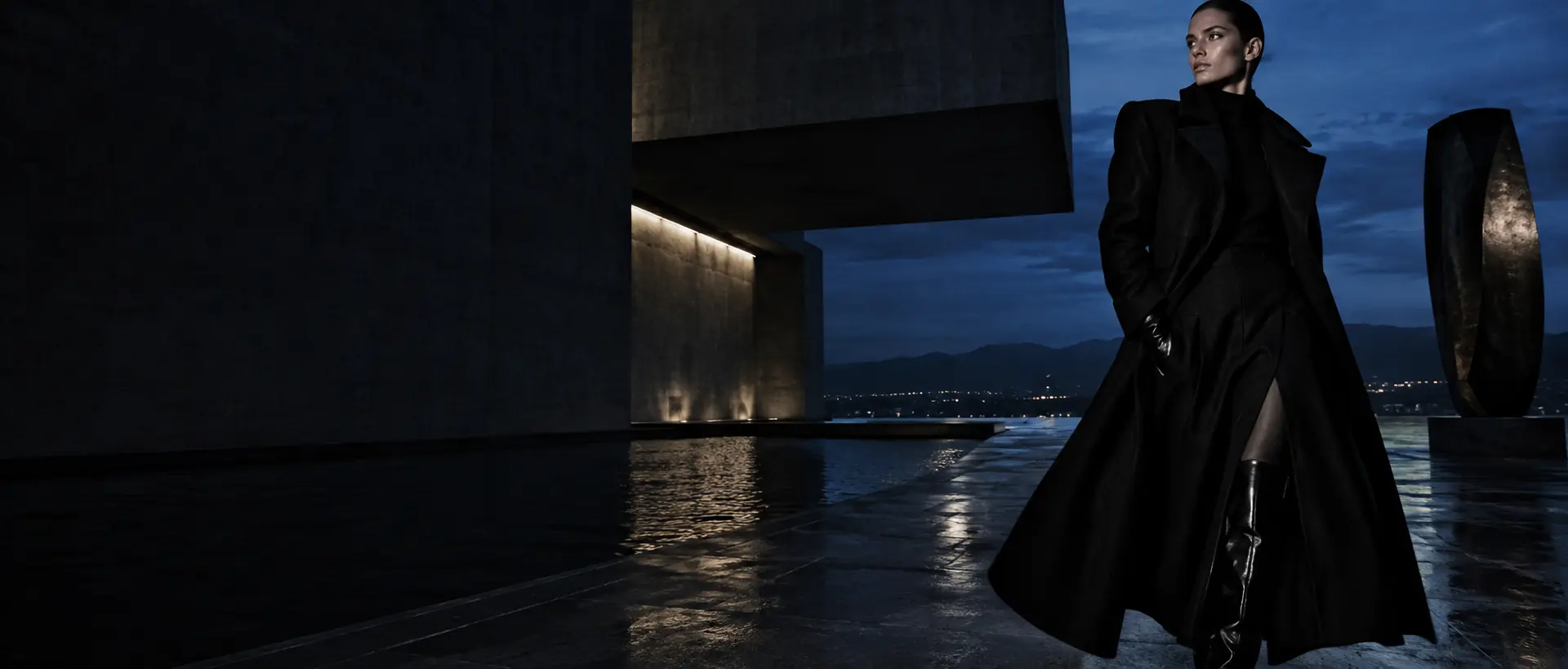
The difference is material and proportion. A matte wool next to a polished leather. A long line beside a hard little shape. The color stays quiet so the construction can speak.
Wear it with something unexpected. Black likes a contradiction.
Why black goes flat
Head-to-toe black fails when every surface does the same thing. Three matte cottons in one shade read as a uniform for stagehands, not a choice. The eye has nowhere to land, so the outfit disappears and takes you with it.
Blacks also drift. A jacket washed fifty times turns charcoal; a new trouser stays ink. Next to each other that gap looks accidental. Either match the depth closely or push the difference far enough that it looks meant.
Three ways to make it deliberate
Change the surface. Pair something that absorbs light with something that reflects it: wool with leather, cotton with satin, suede with patent. Texture is how black shows its range.
Change the scale. A sharp, compact jacket over a wide trouser. An oversized coat over something close to the body. Proportion gives black a silhouette, and silhouette is the whole point.
Add one contradiction. A flash of silver, a hard-edged bag, a shoe with some shine. One element that breaks the field is enough. Two starts to argue.
Keeping black black
Black fades faster than any other color, and faded black is what makes an outfit look tired. Wash dark pieces inside out, in cold water, and less often than you think. Air-dry knits and shirts flat or on a hanger instead of in a hot dryer.
When you shop, compare new black pieces against what you already own in daylight, not under store lighting. Some blacks lean blue, some lean brown. A jacket and trouser that match under a fluorescent tube can disagree badly outside.
Retire a piece when it has drifted to charcoal, or move it to weekend duty, where the contrast matters less.
The short version
Black is not a way to avoid getting dressed. It is a way to get dressed with fewer variables, so the ones left over have to be good.