Start with a black layer that gives your shoulders a point of view. Add a shirt that can be worn open, closed, or under something severe. Then stop shopping for a minute.
The rest is calibration: a good shoe, one unmistakable accessory, and something soft enough to keep the whole thing from feeling like a costume.
The five jobs
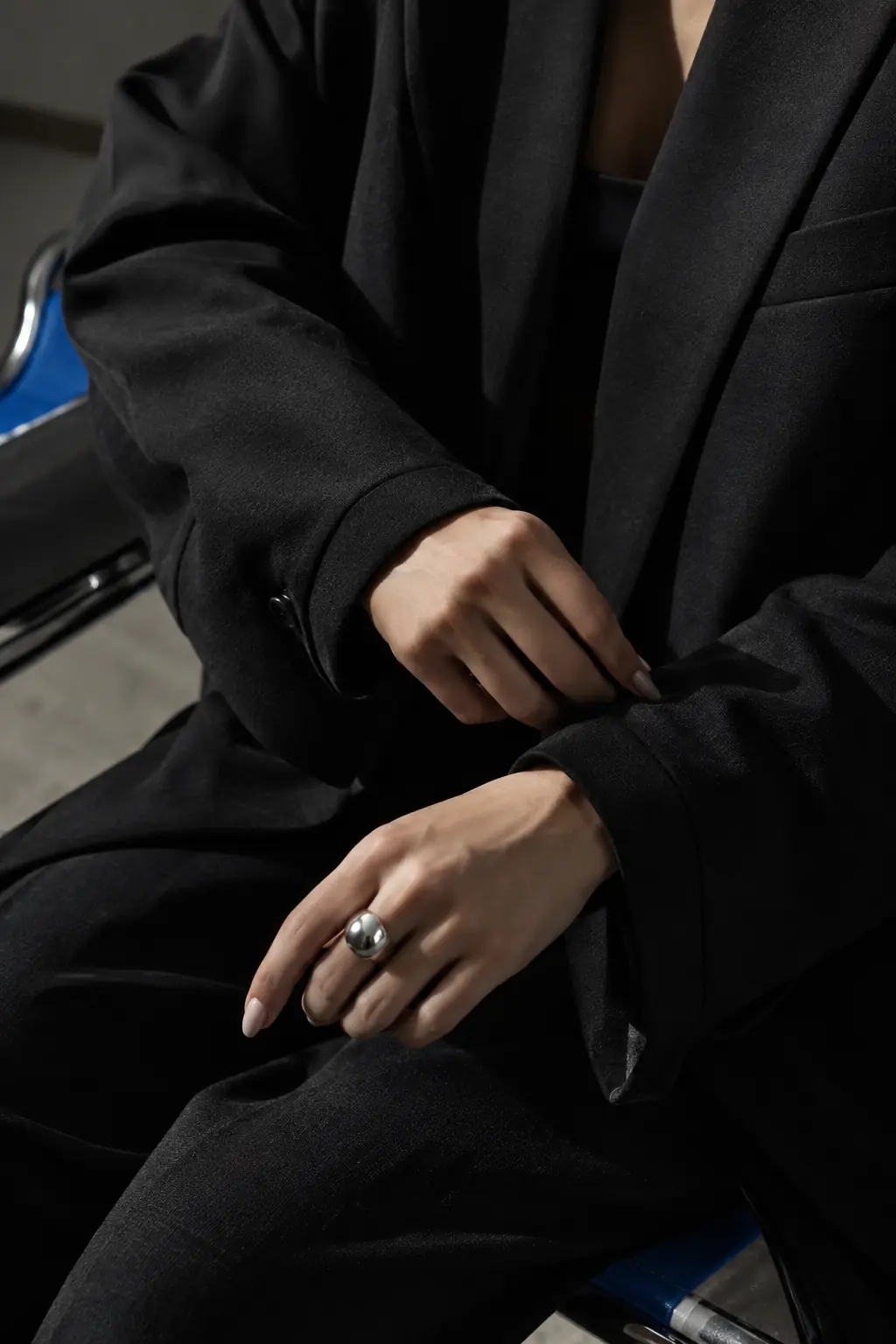
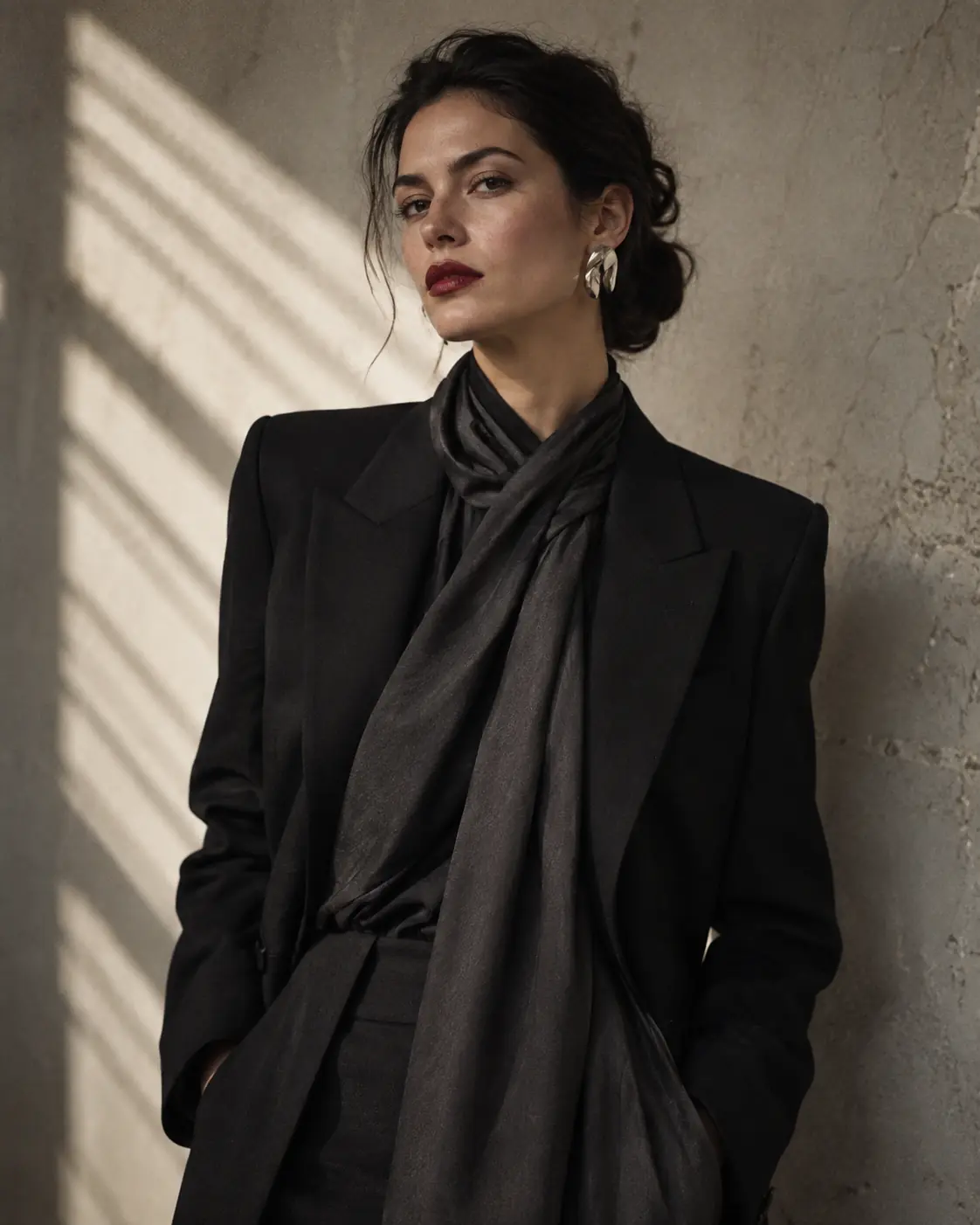
The structure. A blazer or jacket with a defined shoulder. It is the piece that makes jeans look intentional and makes a plain knit look finished. Buy it in the darkest version of a color you already wear.
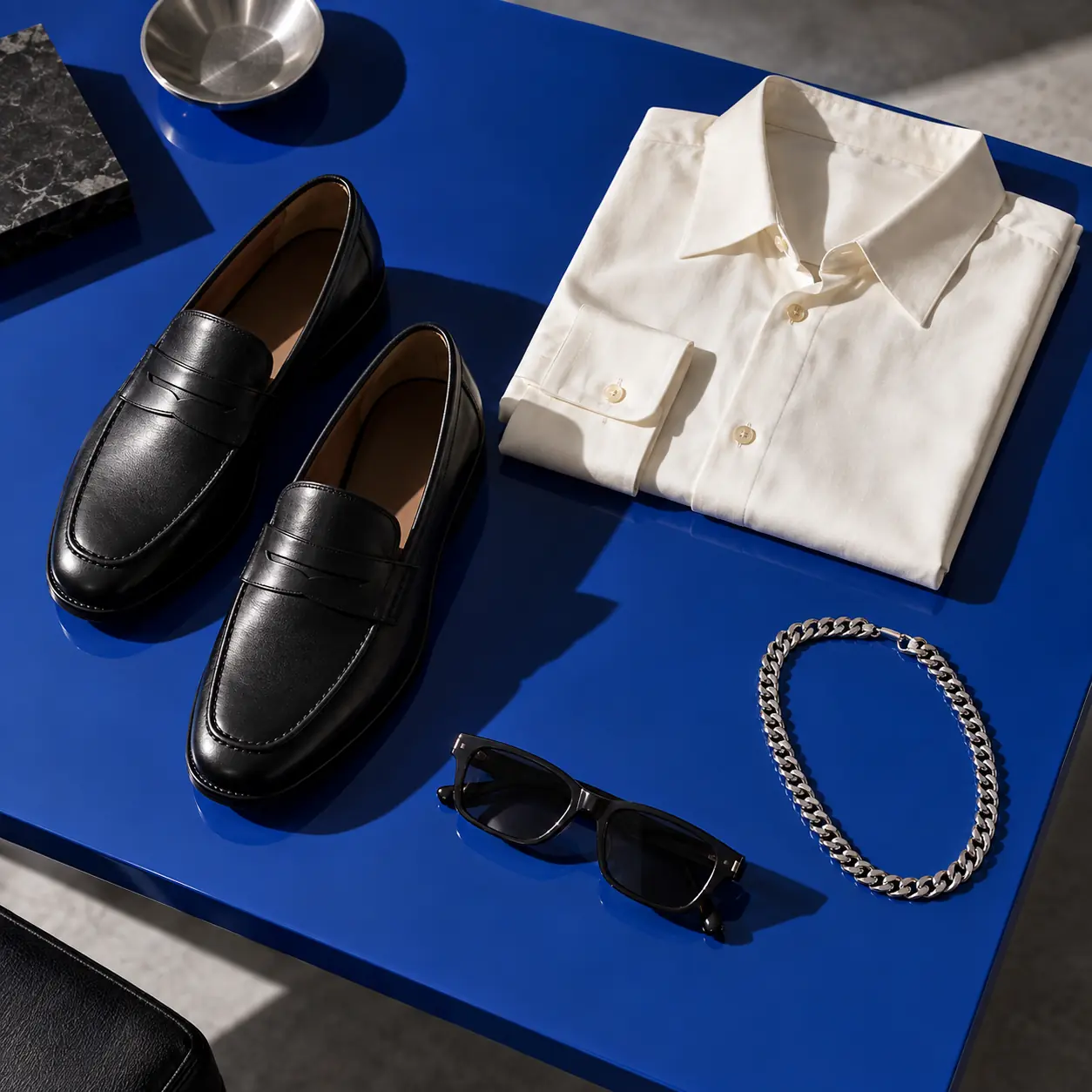
The shirt. Something with a collar that works buttoned to the top, open at the neck, or worn loose over a tee. A slight sheen earns its keep here; it reads as dressed up without trying.
The shoe. One pair that can go to dinner and survive a long walk. A loafer is the obvious answer for a reason: it sits between casual and formal and commits to neither.
The accessory. One object with weight: a chain, a frame, a bag. It is the signature, so pick it on purpose and wear it often.
The soft thing. A knit, a relaxed trouser, a worn-in tee. It keeps the sharp pieces from tipping into costume.
How to tell it is working
Get dressed in the dark for a week. If most combinations of those five land, the uniform works. If one piece keeps getting skipped, it is the wrong piece, not the wrong outfit. Replace it before you add anything.
A uniform is not a rule. It is a default that frees attention for the one detail you actually want people to notice.
Buying the five in the right order
Start with the piece you would reach for most and own least. For most people that is the structured layer, because it upgrades everything already in the closet. The shoe comes next, then the shirt. The accessory goes last, once you can see what the other four need.
Buy the darkest, plainest version first. Color and novelty are easier to add later than to work around. And check fit before label: a modest jacket that fits at the shoulder will outwork an expensive one that does not.