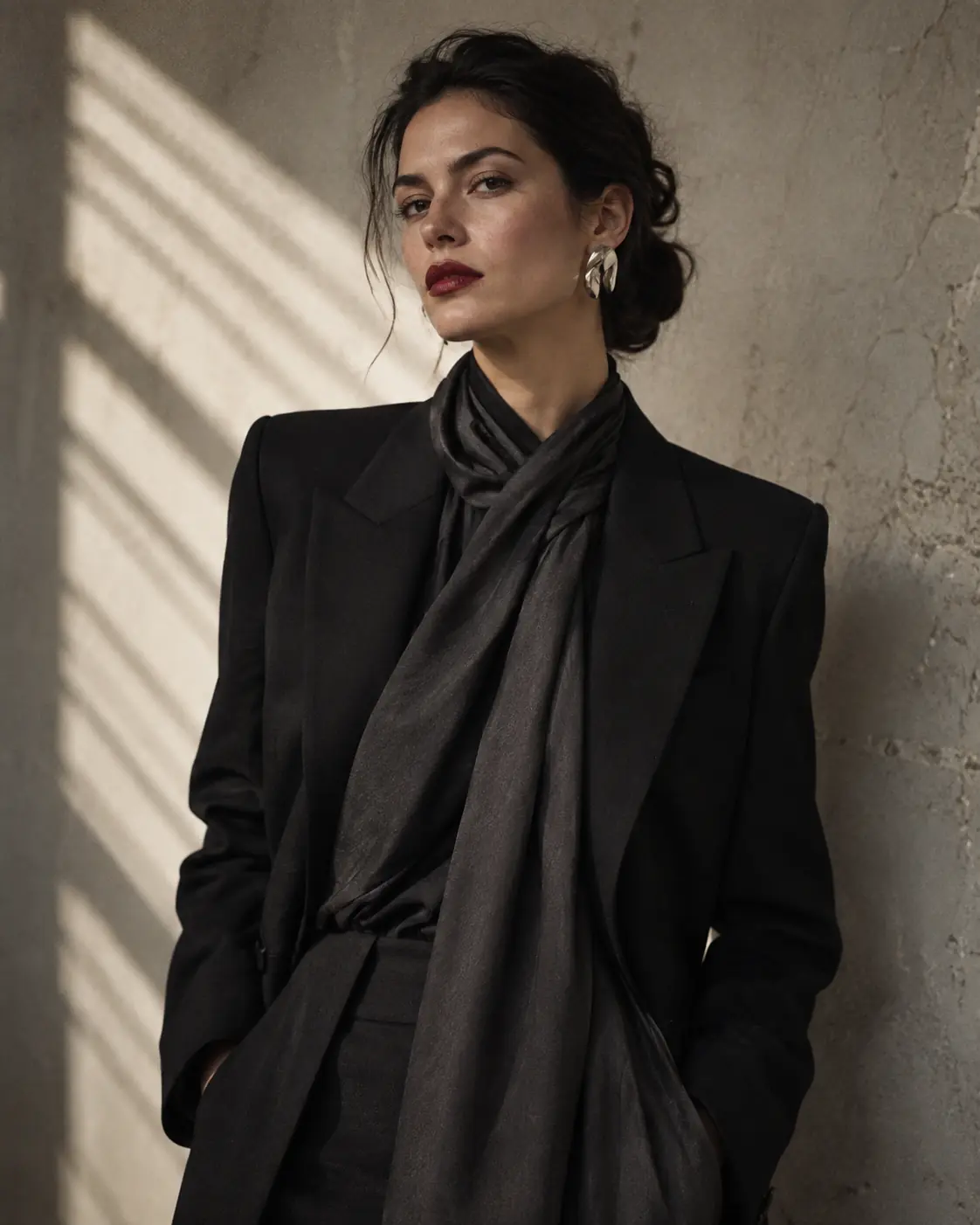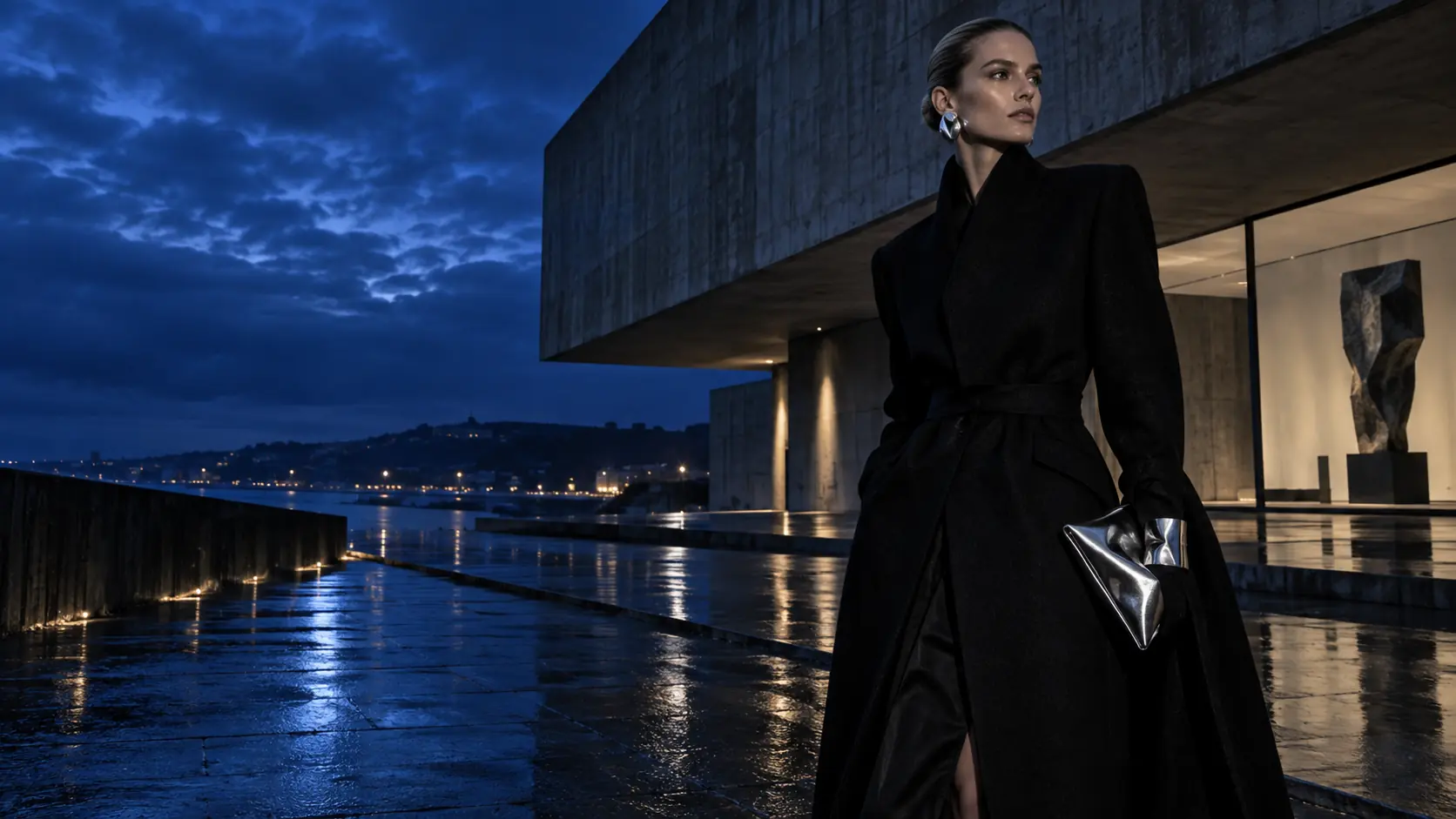
A strong blazer already brings a line and a little authority. After dark, wear it over a fine knit or an open collar instead of building a full suit around it.
Keep the palette close, then change the surface: matte tailoring against a soft shirt, or a clean shoulder over a fluid trouser. One deliberate contrast does enough.
What goes underneath
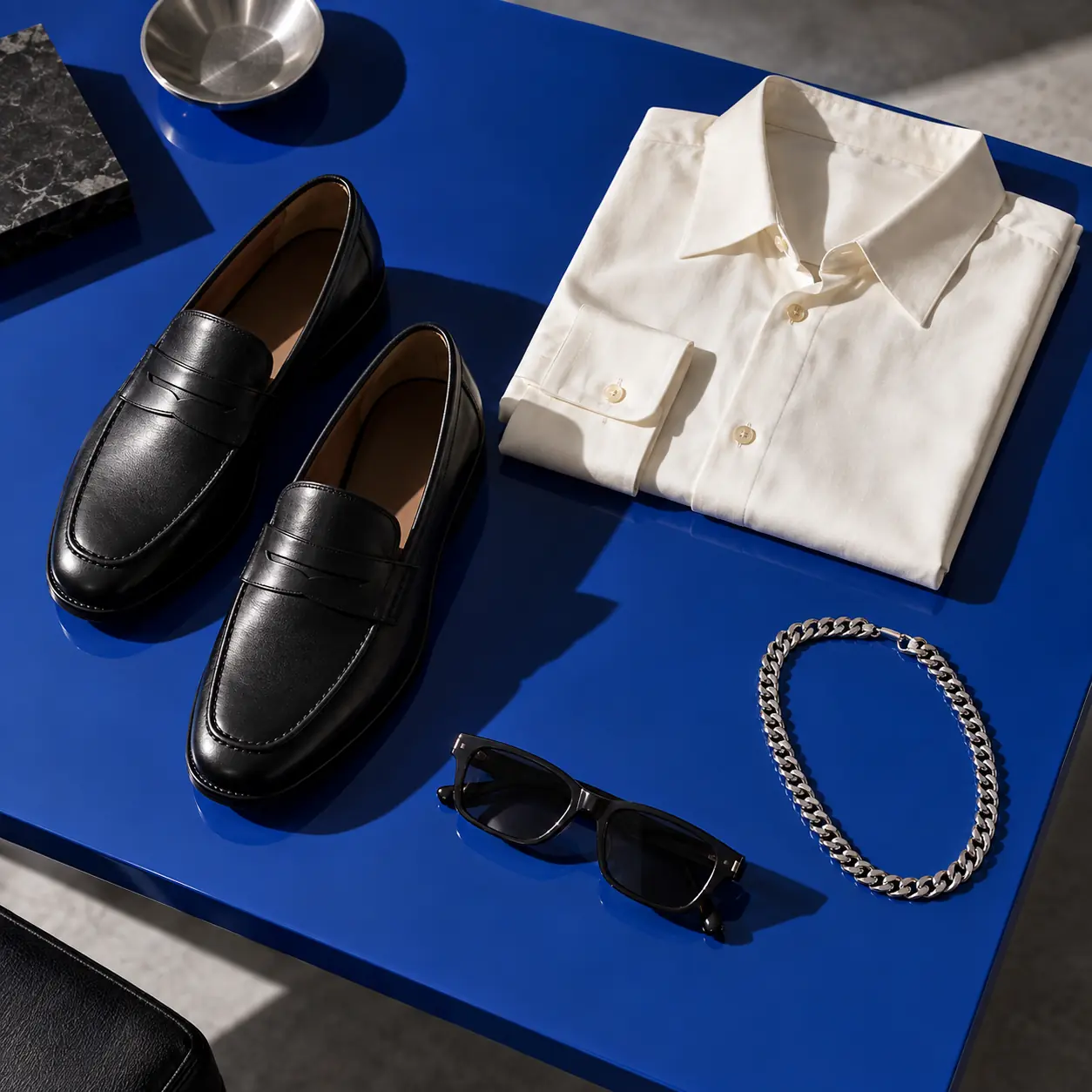
The layer under the blazer sets the temperature. A crisp, buttoned shirt keeps it formal. A satin shirt left open at the neck makes it an evening piece. A thin knit or a plain tee drops it into weekend territory without losing the shape.
Avoid anything with a heavy collar or a busy print under the lapel. The blazer already has a strong neckline. Let it lead.
Below the waist
Break the suit on purpose. A wider, softer trouser makes a structured jacket look relaxed rather than borrowed from the office. Dark denim works when it is clean and plain. Keep the hem neat; a sharp jacket over a puddle of fabric looks unfinished.
Shoes carry the rest. A loafer keeps it polished. A clean, minimal sneaker makes it casual. Either way, keep the shoe darker than the trouser or matched to it.
Sleeves, buttons and the last detail
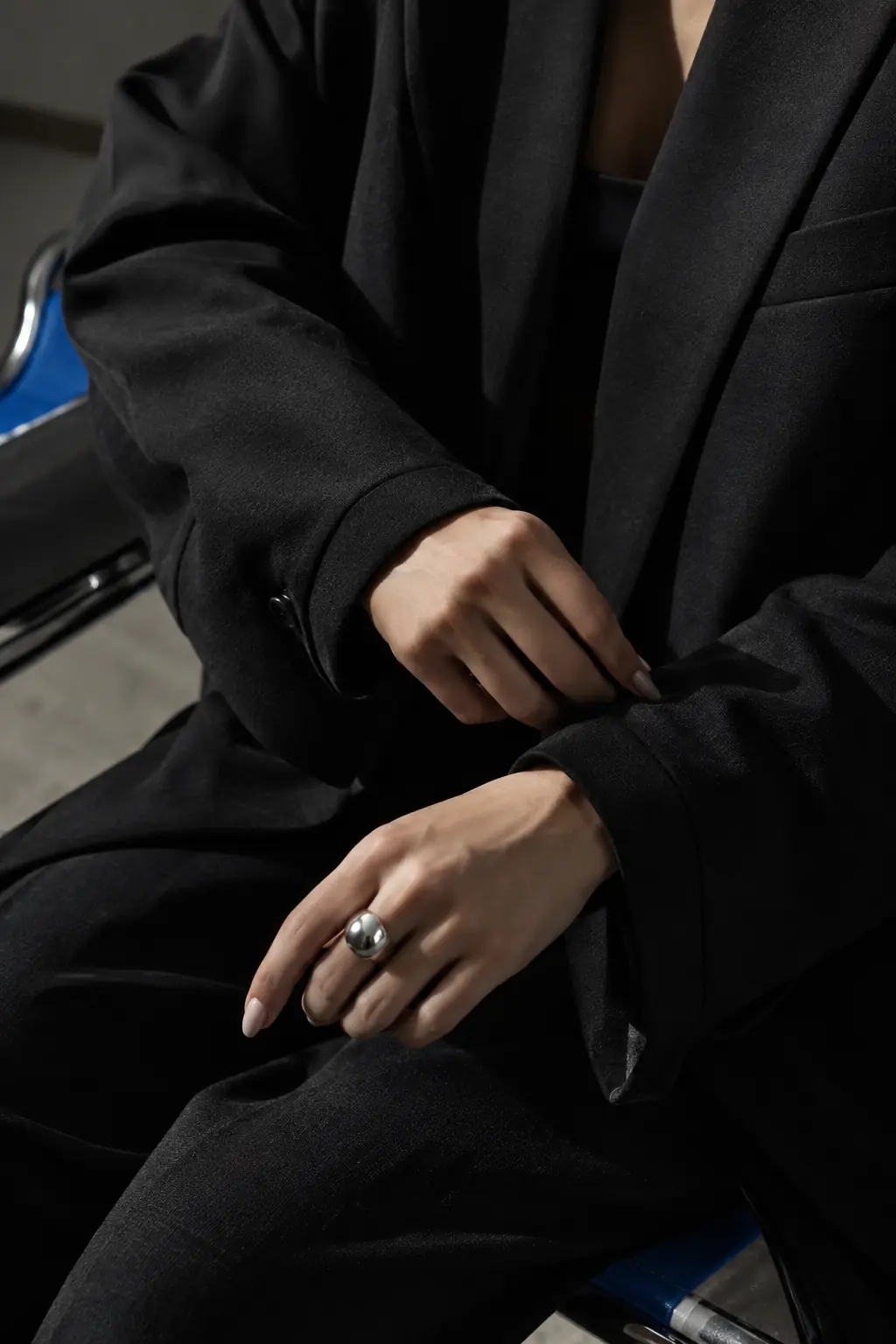
Push the sleeves back slightly or let a cuff show; it signals you are not on the clock. Wear the jacket open. Then add one finishing move, usually metal at the neck or wrist, and leave it there.
Fit matters more after dark
Evening light is less forgiving of a jacket that pulls or slumps than you would expect, because shadows exaggerate every fold. Check three things before you go out: the shoulder seam sits at the edge of your shoulder, the jacket closes without an X of creases across the button, and the sleeve shows a little of whatever is underneath.
If the blazer passes those three tests, it can carry a much simpler outfit than you think. A plain tee and dark trousers under a jacket that fits will look more deliberate than an elaborate outfit under one that does not.