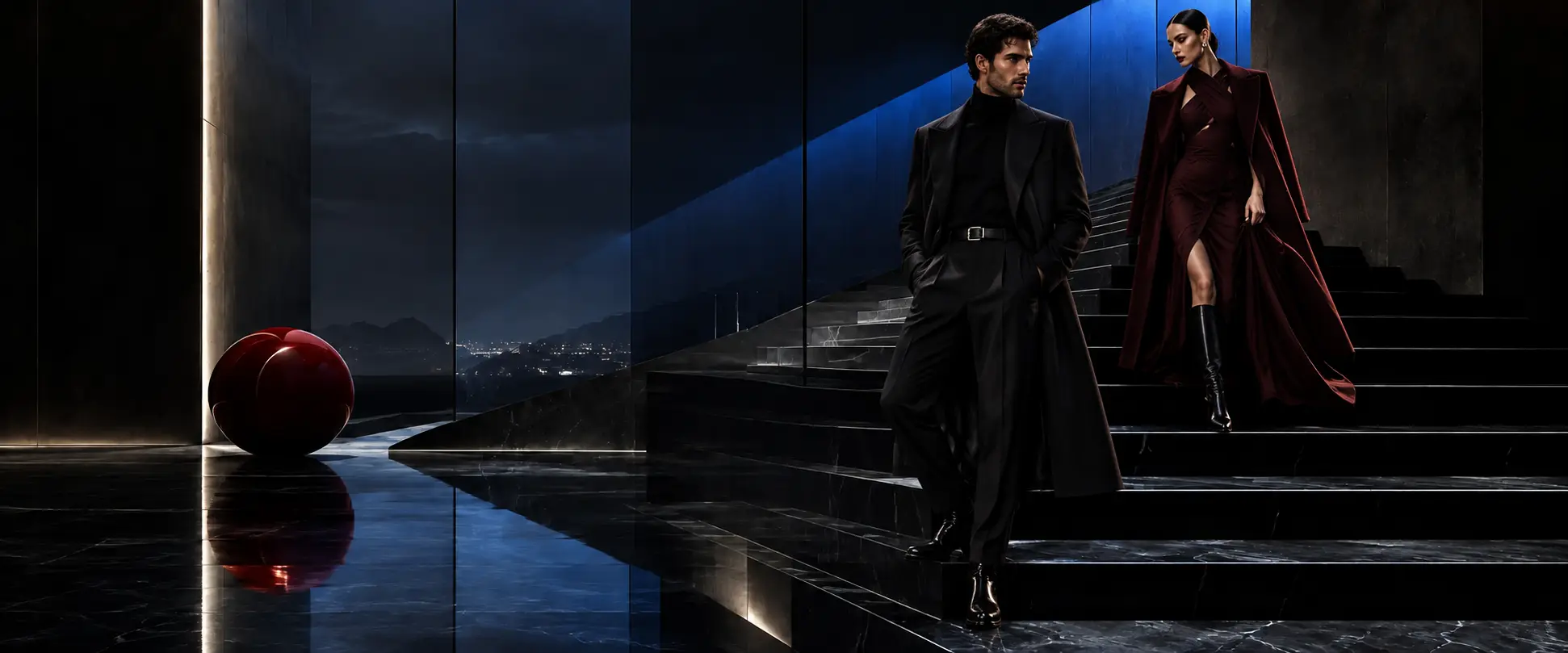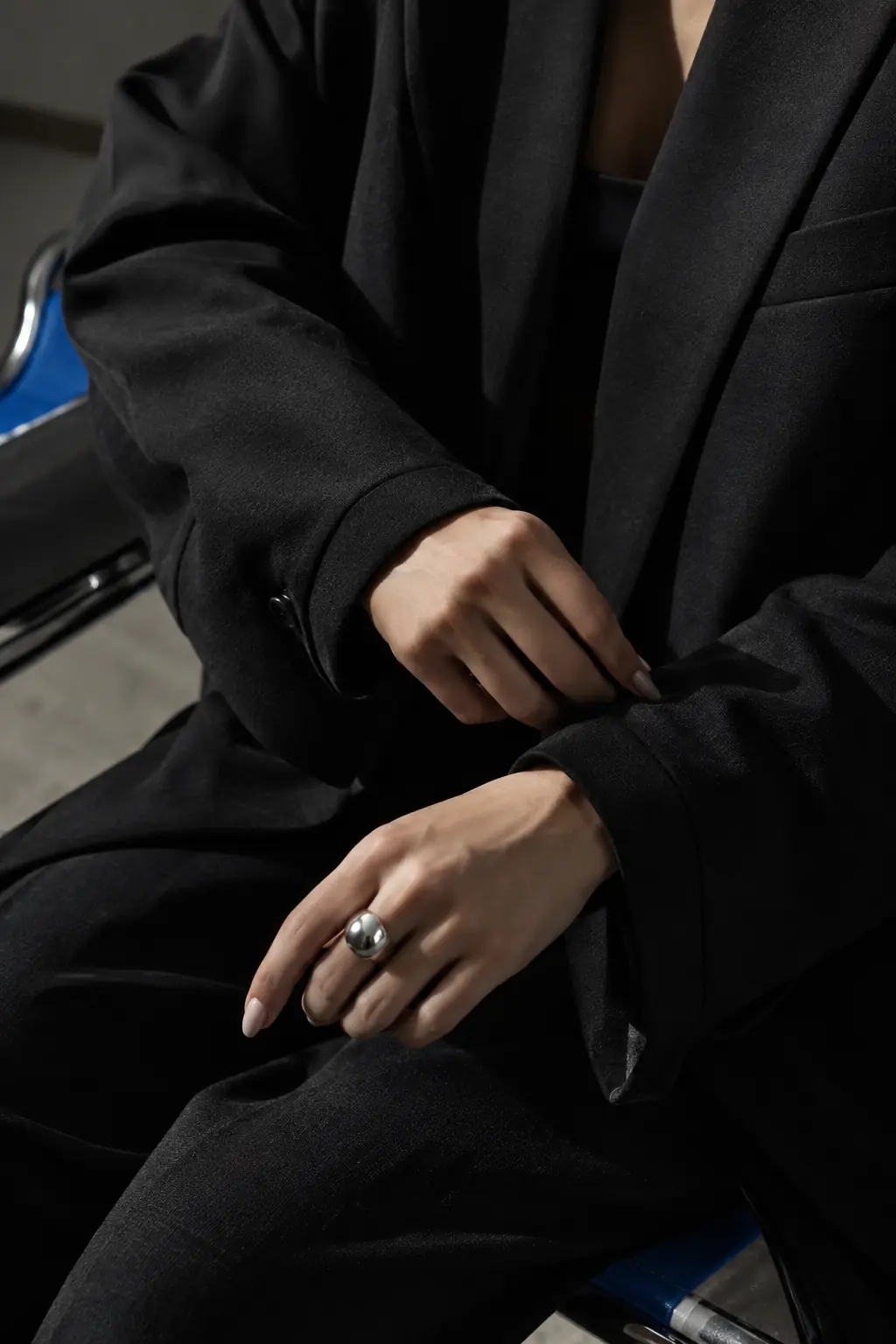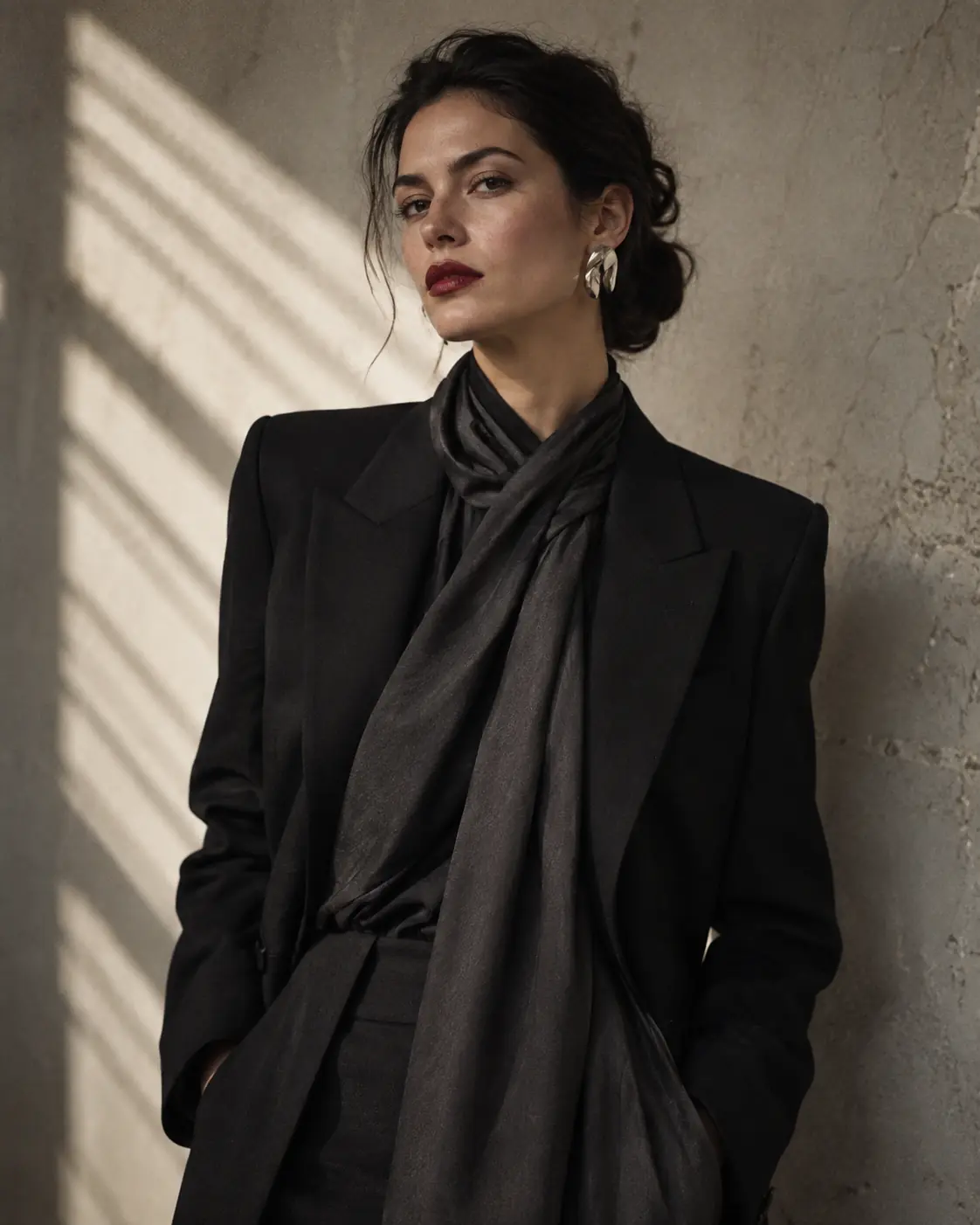
Put a smooth finish next to something dry or nubby: satin with wool, polished leather with cotton, a fine knit under a sharply cut jacket. The shifts in texture give the eye somewhere to land.
Stay within one color family and vary the depth. Black can move from ink to charcoal; ivory can move from chalk to cream. The restraint makes the details read louder.
Build it in three layers
Think of a monochrome outfit as a base, a middle and a finish. The base is the largest area, usually trousers and a top, and it should be the quietest surface. The middle is the layer that gives shape, a jacket or coat, and it can be a shade darker or lighter. The finish is the small stuff: shoes, bag, metal. That is where the shine goes.
Keeping shine to the finish stops the look from turning glossy all over, which tends to read as evening wear whether you meant it or not.
Light colors need more help
Black hides seams and shadows, so it forgives a lot. Bone, ivory and cream show everything. Give them more texture contrast than you would give black: a slubby knit with a satin shirt, a crisp cotton with a soft wool. Mix warm and cool whites carefully; side by side, a cool white can make cream look stained.
When to break it
A single off-color element, one oxblood bag or one silver chain, can sharpen a tonal look rather than spoil it. Keep it small and keep it single. The monochrome does the work; the accent signs it.
A tonal look to start with
If you want a simple version to try, start in black. Wear a matte knit or a plain cotton top, a dark tailored trouser and a structured jacket a shade off from the trouser. Add a leather shoe with some polish and one silver piece. Every layer is the same color, but each one handles light differently, so the look has depth instead of blur.
Once that feels natural, try the same structure in ivory or bone: a satin shirt, a cream knit, a light trouser. It is harder to keep clean, but it is far more striking in a room full of black.